
Example Business Plan Template
-
 ShopifyPut your brand on Shopify. Launch your online store with tools designed for growth and success. Ready to turn your idea into profit? Start building your e-commerce business today.
 -
 SquarespaceShowcase your brand with Squarespace’s sleek designs. Build a professional online presence with ease. Start with a template that already looks finished.
 -
 WixBring your ideas to life with Wix. Customize every aspect of your site with unmatched flexibility. Start creating your unique online space and let your creativity shine.
 -
 ElementorCraft captivating websites effortlessly with Elementor. Enjoy complete creative control without coding. Make your site stand out to your audience. Start turning your vision into reality now.
Executive Summary
We will create a business focused on sustainable fashion. Our mission is to offer environmentally-friendly clothing options that appeal to eco-conscious consumers. Our vision is to become a leading brand in the sustainable fashion industry, promoting eco-friendly practices while providing stylish apparel. Our value proposition revolves around quality, sustainability, and fashion-forward designs. We aim to achieve financial goals of $500,000 in revenue within the first two years of operation.
Business Info
We will provide a range of sustainable clothing items, including casual wear, activewear, and accessories. Our target market consists of environmentally-conscious consumers aged 18-35. We will operate under a direct-to-consumer model, using online sales to reach our audience. Founders building a dedicated green label can study our sustainable fashion business plan template for sourcing and certification details.
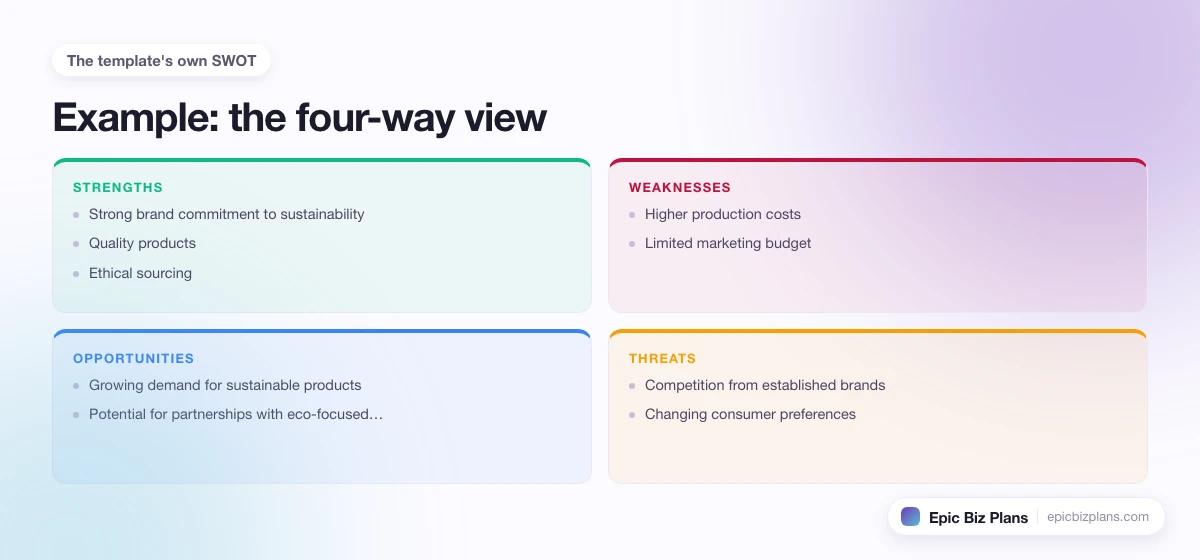
SWOT Analysis
- Strengths: Strong brand commitment to sustainability, quality products, and ethical sourcing.
- Weaknesses: Higher production costs, limited marketing budget.
- Opportunities: Growing demand for sustainable products, potential for partnerships with eco-focused organizations.
- Threats: Competition from established brands, changing consumer preferences.
Business Name Ideas
Website
We will build our website using Shopify, as it is well-suited for eCommerce businesses and will let us manage online sales and inventory easily. We will also consider Squarespace for its aesthetic appeal if the branding calls for a more visually driven platform. Owners planning their full online operation can also reference our ecommerce business plan template. For a plain, fill-in version to start from, see our Se business plan template.
Marketing Details
We will run a digital-first marketing plan. We will use Semrush for SEO to improve our online visibility. For email campaigns, HubSpot will be our platform of choice to engage with our customers. We will also run TikTok ads to reach younger shoppers, highlighting our sustainable practices and fashion styles.
Industry Trends
We will track current trends in the sustainable fashion industry, including advances in eco-friendly materials, the rise of second-hand fashion markets, and consumers prioritizing ethical sourcing. Our business will adapt to these trends by continually improving our products and marketing. Brands building a wider product range can also reference our clothing business plan template for broader merchandising ideas.
Competitor Information
We will identify key competitors in the sustainable fashion space, analyzing their strengths and weaknesses. We will set our brand apart through clear storytelling focused on our sustainable practices and engagement with our community, building loyalty among our customers. Founders comparing manufacturing and wholesale models can also review our apparel business plan template.
Financial Information
Our startup costs will be approximately $150,000, covering inventory, website setup, marketing, and initial operating expenses. We project revenues of $250,000 in the first year, growing to $500,000 by year two. Ongoing expenses will include production costs, marketing efforts, and salaries. We will keep detailed cash flow records and P&L statements to monitor financial health.
Legal and Compliance
We will ensure compliance with legal requirements, including business registration, tax codes, and intellectual property protection for our brand and designs. We will consult legal experts to handle the specifics of these regulations.
Operational Plan
We will build key operations around sourcing sustainable materials, managing inventory, and fulfilling orders. Our supply chain will include partnerships with eco-friendly manufacturers and reliable shipping providers to ensure timely delivery of products.
Contingency Planning
We will identify potential risks, such as supply chain disruptions and shifts in consumer demand. Mitigation strategies will include diversified suppliers, flexible inventory management, and proactive customer engagement to build loyalty and feedback loops.
