
Campsite Business Plan Template
-
 ShopifyPut your brand on Shopify. Launch your online store with tools designed for growth and success. Ready to turn your idea into profit? Start building your e-commerce business today.
 -
 SquarespaceShowcase your brand with Squarespace’s sleek designs. Build a professional online presence with ease. Start with a template that already looks finished.
 -
 WixBring your ideas to life with Wix. Customize every aspect of your site with unmatched flexibility. Start creating your unique online space and let your creativity shine.
 -
 ElementorCraft captivating websites effortlessly with Elementor. Enjoy complete creative control without coding. Make your site stand out to your audience. Start turning your vision into reality now.
- Executive Summary
- Business Info
- SWOT Analysis
- Campsite Business Name Ideas
- Website
- Marketing Details
- Industry Trends
- Competitor Information
- Financial Information
- Legal and Compliance
- Operational Plan
- Contingency Planning
- Startup Cost Breakdown
- Put Your Campsite Business Plan to Work
- Types of Campsite Businesses
- Adapting Your Campsite Business Plan
- Practical Uses for Your Campsite Business Plan
- Take the Next Step
Planning to open a campsite? A clear campsite business plan is the first practical step. Camping demand keeps growing as more travelers look for affordable outdoor stays, and a written plan that defines your sites, pricing, and target guests will help you compete. It turns a general idea into something you can budget, staff, and book.
Your campsite business plan should be more than a document; it is the roadmap for opening and running the site. Be specific about what kind of camping you offer, who your guests are, and how they find you. Define what makes your site worth choosing over nearby options, then turn that into concrete strategies for bookings and repeat visits.
Executive Summary
Our mission is to provide a strong camping experience that connects guests with nature in a comfortable, safe environment. Our vision is to build a community of outdoor enthusiasts who value sustainability and adventure. Our value proposition is a range of campsite options, including glamping, family-friendly sites, and quiet spots for solo travelers. Financial goals include reaching profitability within the first year and building a steady customer base to support future expansion.
Business Info
We will offer a range of camping experiences, from traditional tent sites to glamping accommodations. Our target market includes families, young adults, adventure seekers, and nature enthusiasts, mostly aged 25-45. The business model relies on direct bookings through our website, along with partnerships with travel agencies and outdoor adventure companies. Owners weighing a vehicle-based model may also compare a RV park business plan to see how site fees and hookups affect revenue.
SWOT Analysis
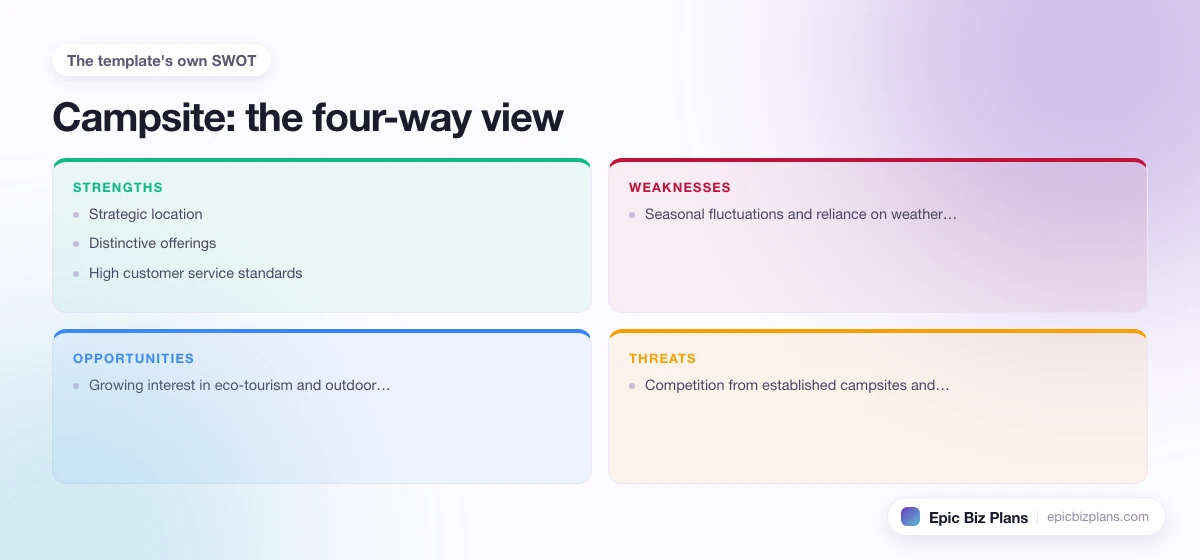
- Strengths: Strategic location, distinctive offerings, and high customer service standards.
- Weaknesses: Seasonal fluctuations and reliance on weather conditions.
- Opportunities: Growing interest in eco-tourism and outdoor activities.
- Threats: Competition from established campsites and possible regulatory changes.
Campsite Business Name Ideas
Website
We will build our website using Shopify or Squarespace, which support e-commerce features for reservations and merchandise sales. These platforms work well because they offer an easy-to-use interface and reliable tools for online transactions. We will also use Wix for general information about our campsite and operations to keep the visitor experience straightforward.
Marketing Details
Our marketing strategy focuses on digital techniques, including SEO with Semrush to improve our online presence and search rankings. We will use HubSpot for targeted email campaigns promoting special offers and events. Social media plays a major role, particularly TikTok ads aimed at younger demographics that show our camping experiences through short, practical clips.
Industry Trends
Current trends show rising interest in outdoor activities and eco-friendly travel. Online booking systems are now standard for campsite management, which raises guest expectations for fast, mobile-friendly reservations. There is also steady demand for glamping, which pairs comfort with an outdoor setting. A related cabin business plan shows how built accommodations capture the same comfort-focused guests.
Competitor Information
We will study both direct and indirect competitors in our region, looking at their offerings, pricing, and customer experience. We will set our business apart through distinctive camping experiences, strong customer service, and a clear commitment to sustainability. We will highlight our eco-friendly practices in marketing to attract environmentally conscious guests. Reviewing a private resort business plan can also help benchmark pricing against higher-end stays.
Financial Information
Startup costs are projected within a defined budget that accounts for land acquisition, site development, marketing, and operating expenses. We aim to break even within the first year, forecasting gradual revenue growth as bookings increase. Ongoing expenses include staff salaries, utilities, maintenance, and marketing costs. We will maintain a cash flow and P&L statement to manage resources effectively.
Legal and Compliance
We will handle the legal steps for registering the business and obtaining the permits required to operate a campsite. We will also pursue intellectual property protection for our branding and distinctive offerings to keep our position secure.
Operational Plan
Key operations include site maintenance, customer service training, and logistical planning for supplies and resources. We will build relationships with local suppliers to keep delivery of necessary goods reliable, which supports both efficiency and sustainability. For a related approach, see our summer camp business plan.
Contingency Planning
Potential risks, such as severe weather events or economic downturns, will be monitored and assessed. We will prepare mitigation strategies, including full insurance coverage and flexible financial planning, so the business can adjust to unexpected challenges while keeping guests satisfied and operations stable.
Startup Cost Breakdown
A clear cost breakdown helps a new campsite set realistic pricing and avoid running short before the first busy season. Land acquisition or lease is usually the largest item, followed by site development such as access roads, water, restrooms, and electrical hookups. Budget separately for permits, liability insurance, and the booking system you will run year-round.
Glamping tents, cabins, or other built accommodations raise upfront costs but allow higher nightly rates. Owners comparing models can review a cozy cabin business plan or a RV rental business plan to weigh which accommodation mix fits their land and budget.
Put Your Campsite Business Plan to Work
Picture starting each day surrounded by the scenery your guests travel to see. Opening a campsite means building work around the outdoors and the people who value it. Whether it is a small local campsite, a glamping business, or an online store selling camping gear, there are several ways to build a place in this growing industry.
-
 SemrushSemrush is a platform with literally any online tool you will need to promote your business. Spy on your competitors, get search traffic, keyword research, social info, ad copies and much more. Used by most of the top online companies in the world. Besides all its tools, Semrush also has many available integrations possible with many other tools that will make your work even better.
 -
 Surfer SEOSurfer SEO is an incredibly smart AI tool that will give you exact explanations what to do in order to make your website rank better. They use hundreds of parameters, check your competitors and decide on the best course of action. Whether it be inner links, bold text, paragraphs, headers, images and much more. Surfer is a must-have in 2026.
Types of Campsite Businesses
The options are wide. You could open a rustic campsite in a scenic location, run guided tours for outdoor enthusiasts, or create an online hub for camping gear and accessories. From small local operations to larger enterprises, there is plenty of room to build a campsite that connects with nature lovers.
Adapting Your Campsite Business Plan
Your campsite business plan should change as you grow. Update it for different audiences, adjust pricing models, introduce new products, or expand into new regions or sales channels. A plan you keep current helps you respond to changing market demand.
Practical Uses for Your Campsite Business Plan
This plan serves several purposes, from presenting to potential partners and investors to planning a launch or clarifying your strategy. Whatever stage you are in, a solid plan keeps your decisions consistent.
Take the Next Step
Your campsite business plan is 100% free, with unlimited edits, unlimited downloads, and unlimited chances to get it right. It is time to turn your idea into a working business and start booking guests.
