
Breeder Business Plan Template
-
 ShopifyPut your brand on Shopify. Launch your online store with tools designed for growth and success. Ready to turn your idea into profit? Start building your e-commerce business today.
 -
 SquarespaceShowcase your brand with Squarespace’s sleek designs. Build a professional online presence with ease. Start with a template that already looks finished.
 -
 WixBring your ideas to life with Wix. Customize every aspect of your site with unmatched flexibility. Start creating your unique online space and let your creativity shine.
 -
 ElementorCraft captivating websites effortlessly with Elementor. Enjoy complete creative control without coding. Make your site stand out to your audience. Start turning your vision into reality now.
- Executive Summary
- Business Info
- SWOT Analysis
- Breeder Business Name Ideas
- Website
- Marketing Details
- Industry Trends
- Competitor Information
- Financial Information
- Legal and Compliance
- Operational Plan
- Boarding and Kennel Integration
- Contingency Planning
- Building a Responsible Breeding Business
- Adapt and Evolve
- Your Future Awaits
A breeder business plan covers the operational, financial, and regulatory aspects of running a responsible animal breeding operation. Whether you specialize in dogs, cats, or another breed, the difference between a profitable breeding business and a costly hobby comes down to planning - understanding your costs, knowing your market, and meeting the legal and ethical standards that buyers increasingly demand.
This template walks through every section of a professional breeding business plan, from startup costs and veterinary requirements to marketing strategies that connect healthy, well-bred animals with responsible owners.
Executive Summary
The mission is to provide high-quality, ethically bred pets that improve the lives of their owners. We also guide new owners toward reliable pet products to ensure their animals thrive from day one. The vision is to build a reputation as a breeder known for transparency, thorough health testing, and breeding for temperament alongside physical standards. The financial target is breakeven within year one and a 20% profit margin by the end of year three. For general animal operations, see the animal business plan template.
Business Info
The business specializes in breeding cats and dogs, focusing on popular, high-demand breeds with strong health profiles. The target market is families and pet enthusiasts looking for healthy, well-socialized animals from a breeder they can trust. Sales happen through a combination of online inquiries and in-person visits to the breeding facility. For entrepreneurs focused specifically on dog breeds, our French Bulldog business plan template provides breed-specific guidance.
SWOT Analysis
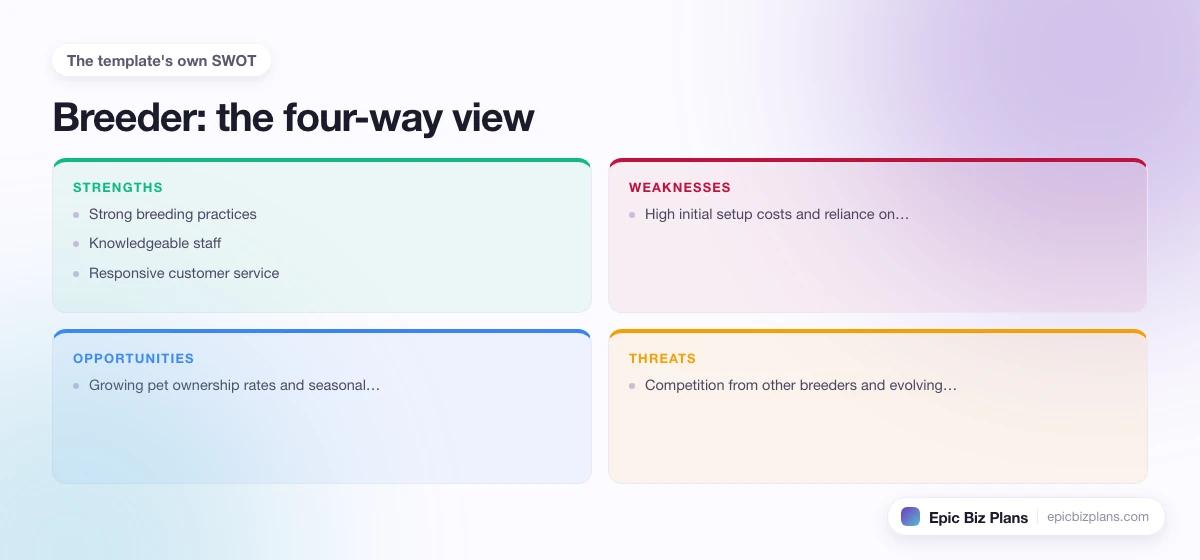
- Strengths: Strong breeding practices, knowledgeable staff, and responsive customer service.
- Weaknesses: High initial setup costs and reliance on digital marketing for customer acquisition.
- Opportunities: Growing pet ownership rates and seasonal demand spikes around holidays.
- Threats: Competition from other breeders and evolving animal breeding regulations.
Breeder Business Name Ideas
Website
Shopify is the recommended platform for managing online inquiries and any product sales such as pet supplies or accessories. It handles payments securely and offers templates that work well for showcasing available animals with photos and detailed descriptions. A clear, professional website builds buyer confidence - especially for customers purchasing a pet sight unseen before their facility visit.
Marketing Details
SEO through Semrush will target breed-specific search terms and location-based queries like "reputable [your breed] breeder near me." Email marketing via HubSpot will keep past customers and waitlist subscribers informed about upcoming litters, care tips, and available animals.
TikTok and Instagram content showing puppies and kittens in their daily routines, socialization activities, and health checkups performs exceptionally well for breeder businesses. Video content builds trust by showing the actual conditions animals are raised in. Our veterinary practice business plan covers complementary marketing strategies for animal care professionals.
Industry Trends
Ethical breeding practices have moved from a nice-to-have to a buyer requirement. Customers now expect DNA testing, health certifications, and transparent breeding histories as standard. Breed verification through genetic testing is becoming routine, and breeders who invest in these practices command significantly higher prices. The overall pet industry continues to grow, with spending on pets reaching record levels year after year. Breeders focused on a single breed can reference a French Bulldog Breeder business plan for a breed-specific approach.
Competitor Information
Competitors include local breeders, larger pet stores with breeding programs, and online platforms that connect buyers with breeders nationally. Differentiation comes from documented health testing, transparent breeding practices, ongoing buyer support after purchase, and educational resources on the website. Breeders who treat the business as a long-term relationship rather than a transaction earn stronger referrals and repeat business. For related business models in the pet space, see our pet adoption business plan template.
Financial Information
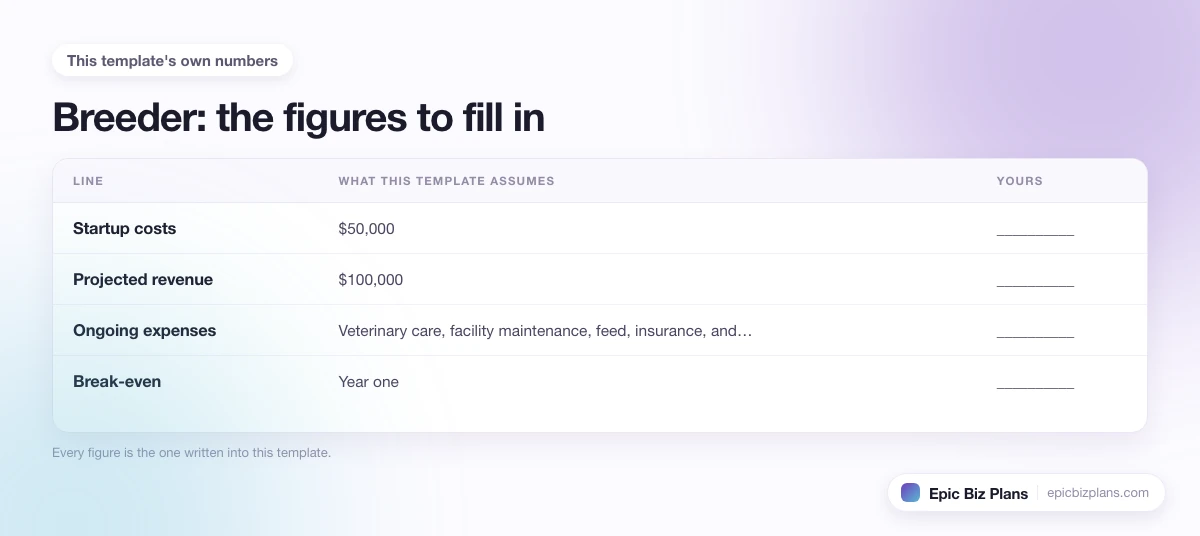
Startup costs are projected at $50,000, covering facility setup, initial breeding stock acquisition, veterinary testing, and marketing launch. First-year revenue is targeted at $100,000, scaling to $250,000 by year three as the breeding program matures and reputation builds. Ongoing expenses include veterinary care, facility maintenance, feed, insurance, and marketing. Monthly profitability is expected by the end of year one.
Legal and Compliance
Breeding businesses must comply with local and state regulations regarding animal welfare, licensing, and facility standards. Business registration, breeding permits, and regular veterinary inspections are baseline requirements. Some jurisdictions require specific certifications or limit the number of breeding animals. Staying ahead of regulatory changes protects the business from fines and reputational damage.
Operational Plan
Operations center on the breeding facility, which must maintain controlled, healthy environments for all animals. Veterinary partnerships ensure regular health screenings, vaccinations, and emergency care access. Supply chain logistics cover feed, supplements, grooming supplies, and whelping or birthing equipment. Every animal should follow a documented care plan covering health checks, socialization milestones, and basic training before placement. Entrepreneurs who also sell pet supplies may find our dog accessories business plan relevant for that side of the operation.
Boarding and Kennel Integration
Many successful breeding operations expand into boarding services to generate revenue between litters. A well-run kennel creates additional income while keeping the facility active and staff fully employed year-round. It also exposes the breeding operation to new potential buyers who visit for boarding services. Our kennel business plan template covers the operational and licensing requirements for adding boarding to a breeding operation.
Contingency Planning
Key risks include regulatory changes that restrict breeding operations, demand fluctuations, and veterinary emergencies that increase costs unexpectedly. Mitigation strategies include maintaining a contingency fund covering at least three months of operating expenses, staying active in breeder associations that track regulatory developments, and building relationships with multiple veterinary providers.
Building a Responsible Breeding Business
A breeding business succeeds long-term when it puts animal welfare at the center of every decision. Buyers are more informed than ever and will research a breeder's reputation thoroughly before making a purchase. The breeders who thrive are the ones who document their practices, maintain open communication with buyers, and stand behind the health of every animal they place.
-
 SemrushSemrush is a platform with literally any online tool you will need to promote your business. Spy on your competitors, get search traffic, keyword research, social info, ad copies and much more. Used by most of the top online companies in the world. Besides all its tools, Semrush also has many available integrations possible with many other tools that will make your work even better.
 -
 Surfer SEOSurfer SEO is an incredibly smart AI tool that will give you exact explanations what to do in order to make your website rank better. They use hundreds of parameters, check your competitors and decide on the best course of action. Whether it be inner links, bold text, paragraphs, headers, images and much more. Surfer is a must-have in 2026.
Adapt and Evolve
Update this plan as your breeding program develops, your reputation grows, and market conditions shift. Adjust your breed focus based on demand trends, test new marketing channels, and consider expanding into related services like grooming, training, or pet supply sales.
Your Future Awaits
Your breeder business plan is 100% free - with unlimited edits, unlimited downloads, and unlimited chances to get it right.
